
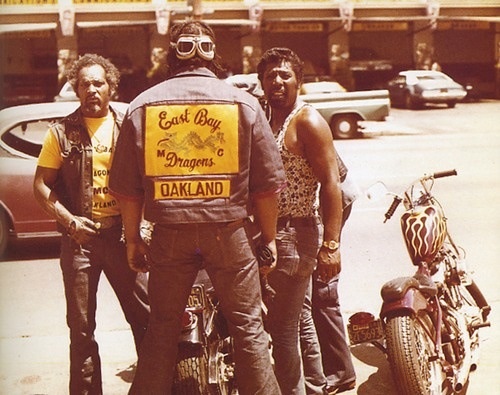
From outlaw clubs to the East Bay Dragons, the American biker wardrobe developed a language of its own – one shaped as much by identity and counterculture as by life on the road.
The Biker Uniform
When you imagine burly bikers and their Harley-Davidsons, the first thing that comes to mind perhaps isn’t menswear. But you would be sorely mistaken. While the origins of America’s infamous 1% motorcycle clubs are shrouded in mystery, their style certainly isn’t.
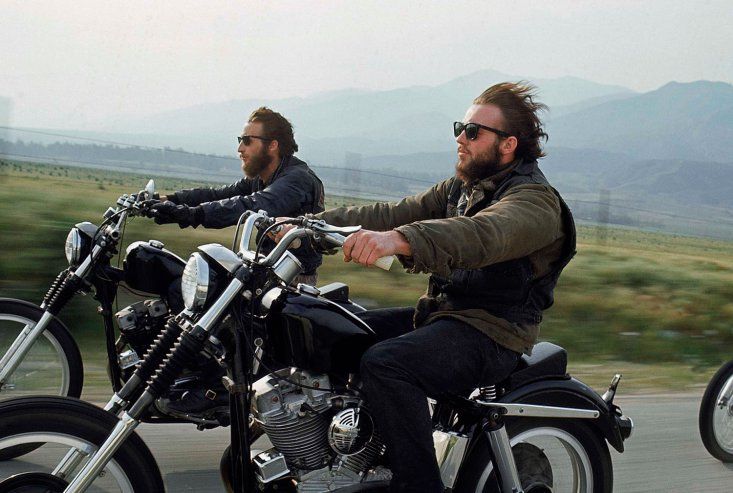
It’s deceptively easy to reduce their look to a uniform, with the main piece being a leather vest or jacket. Although there’s certainly some truth to this today, back in mid-century American biker culture, jeans and denim had become cornerstones of the counterculture – and the bikers were not about to get left behind.
Bikers and Hippies
Becoming part of the wider countercultural movement themselves, bikers found themselves increasingly occupying the same space as hippies. They shared a distrust of authority, a love of rock ’n’ roll and a dedication to denim. A famous example of this overlap comes from the Grateful Dead, who were known to associate with the Hells Angels. The Angels’ presence at the infamous Altamont concert, where concertgoer Meredith Hunter was killed, became part of an event largely credited with symbolically marking the end of the era of peace and love.
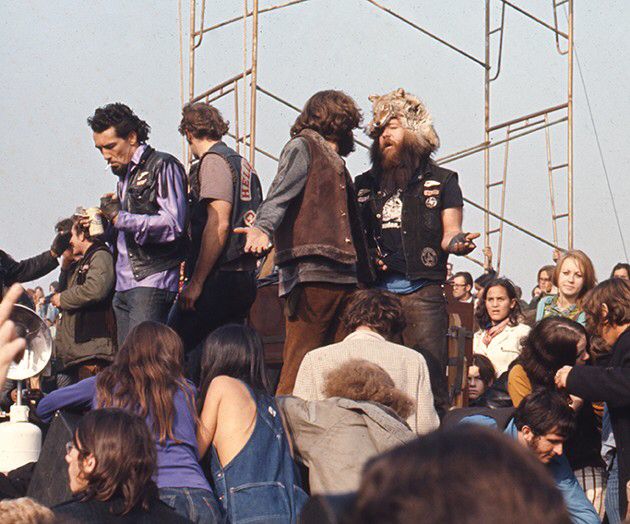
Although bikers and hippies might have been similar, they had just as many differences. The hippies were famously all about peace and love, while the bikers cultivated an image built around toughness, confrontation and violence.
A Different Biker Culture
But this story is not solely about a largely white counterculture. Alongside the well-known California clubs, many of which excluded non-white members, a distinct Black biker culture was taking shape, with its own clubs, communities and style.
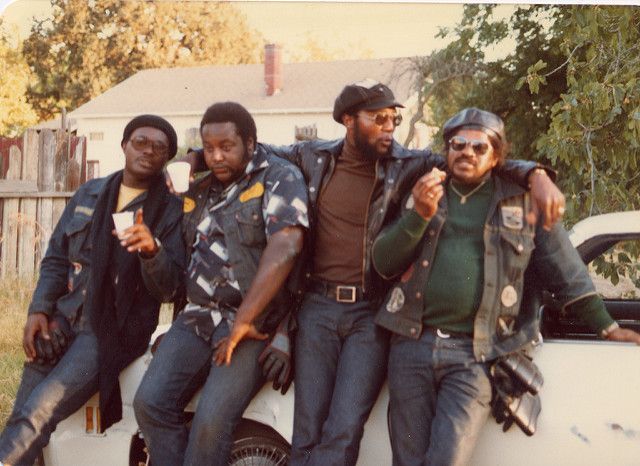
In California, one of the most important examples emerged in Oakland in 1959. The car club East Bay Dragons was transformed into an all-Black, all-Harley motorcycle club under the leadership of Tobie Gene Levingston. Over the following decades, the Dragons would grow into one of the best-known Black motorcycle clubs.
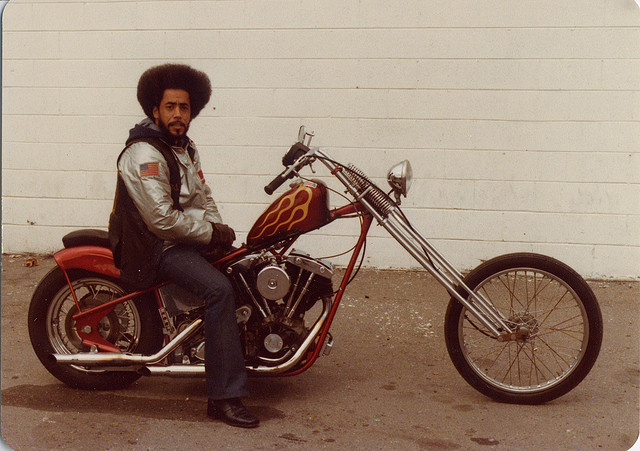
Like many other Black motorcycle clubs of the era, they developed their own distinctive style. While they of course wore denim, leather vests and engineer boots, their style went beyond functionality. It served as a form of self-expression, as important as motorcycles, cars or homes themselves.
What made them so different wasn’t so much the individual pieces, but rather how they were worn. Years of dirt, blood and road dust told a story about the wearer.
Clothes That Tell a Story
For many years, the club’s main uniform has been grease-stained black Levi’s jeans and vests bearing their signature patch – a green dragon against a gold background.
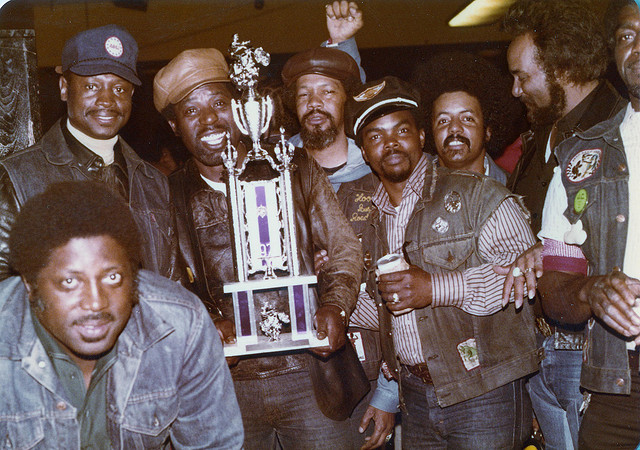
The vest in particular became more than just a piece of clothing. Pins, patches and souvenirs would accumulate over years of riding the open roads. It went from being a regular denim vest to a deeply personal item of clothing, filled with memories and experiences.
Changing With the Decades
The prevailing style trends of each decade also seeped into biker style. While the basic uniform might have remained the same, the cuts, lengths and styling of the clothes changed with the times. Bikers wearing bell-bottoms were, for example, not an unusual sight during the 1970s. Hair and jackets became longer, shirts more colourful and silhouettes followed the trends of the decade.
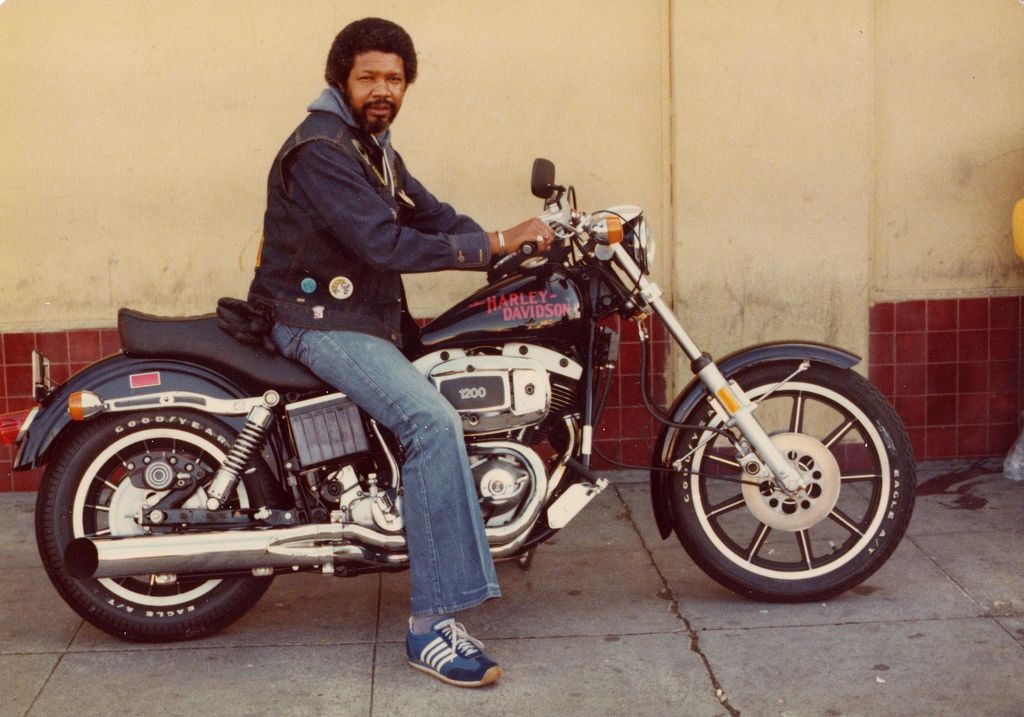
In many ways, the biker wardrobe has remained the same for decades, but just as with the style of the general population, each era left its mark. The Dragons’ black Levi’s and denim vests could belong to almost any period – it was how they were worn, cut and customised that made them distinct.
It was never really about following trends; the trends themselves found their way into the uniform.
More Than One Biker America
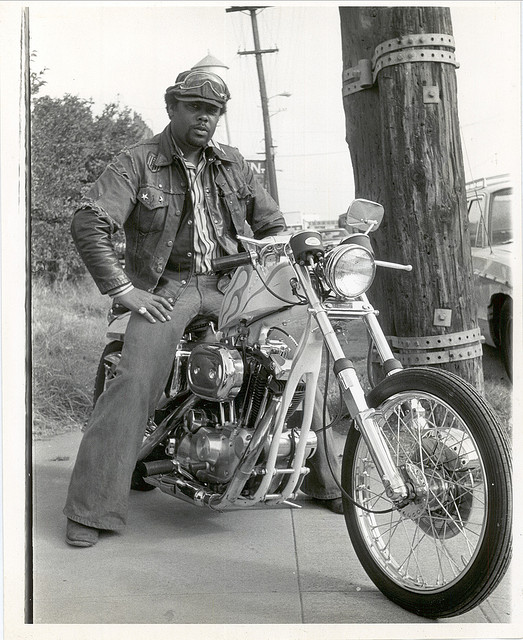
While the image of the American biker has been heavily shaped by the likes of the Hells Angels, the East Bay Dragons remind us that there was never just one unified biker culture.


Leave a comment