
A preppy classic with sporty roots
Born on the rugby field and adopted by everyone from British labourers to Ivy League students, the rugby shirt has travelled effortlessly between sport, subculture and style. Today, it remains one of the most recognisable staples of the preppy wardrobe.
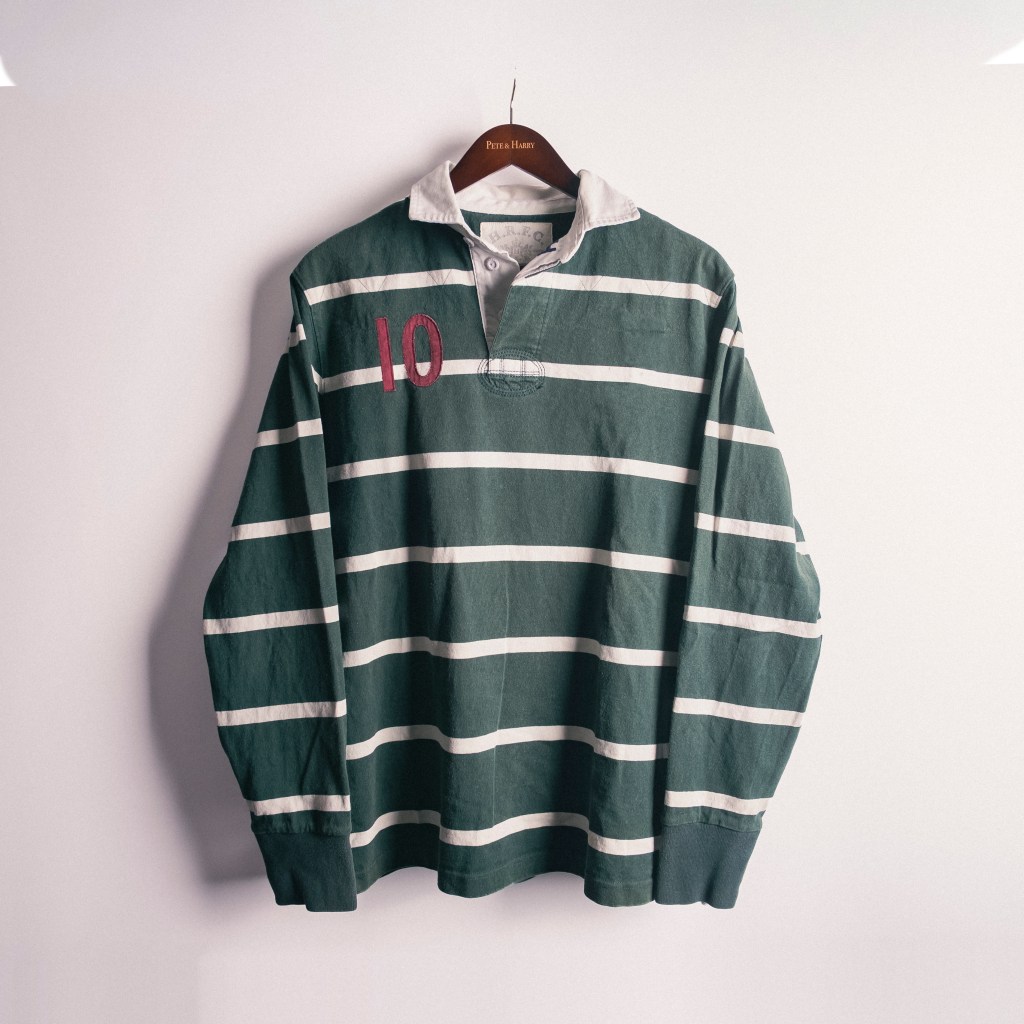
Imagine 30 burly men on a field, wrestling and fighting over an oval-shaped ball. If this immediately makes you think of a sturdy, long-sleeved cotton shirt with a short buttoned placket and a small collar, then congratulations, you’re probably a menswear nerd.
From the Playing Field
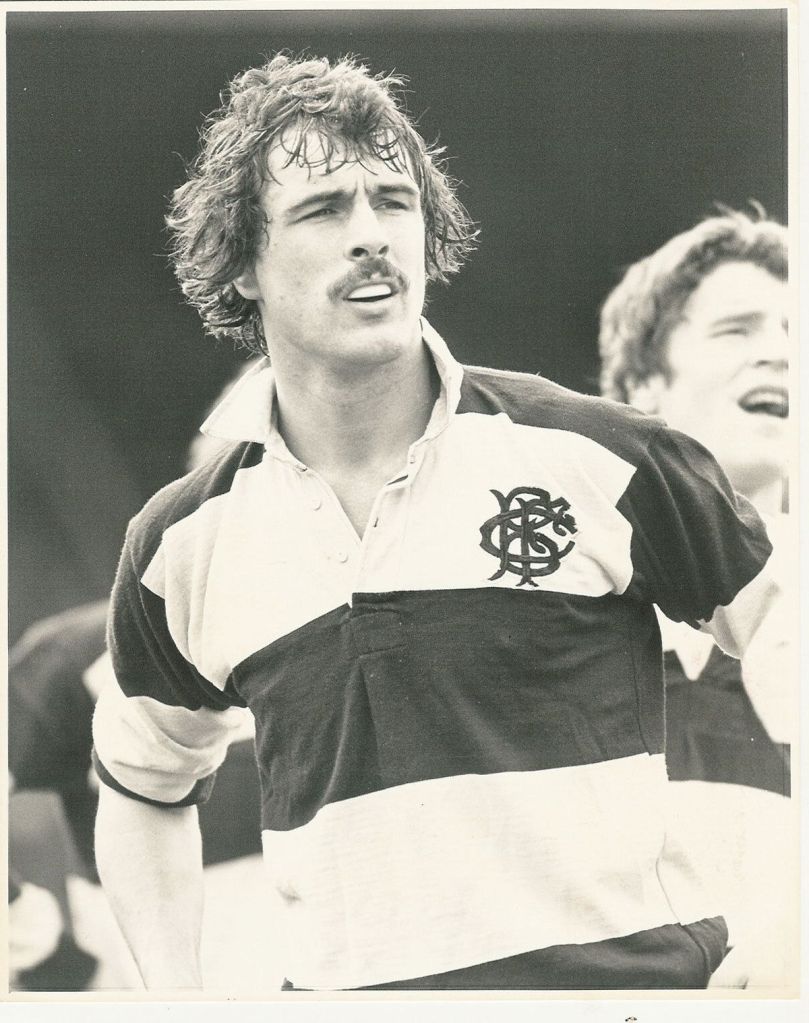
Although it’s difficult to pinpoint exactly how and when rugby began, the general consensus is that the sport originated at Rugby School in England – unsurprisingly. By the mid-1800s, rugby clubs had begun popping up across the UK. The earliest rugby jerseys were made from wool, but it soon became apparent that heavy, itchy and sweat-soaked jerseys weren’t exactly ideal for a high-intensity sport like rugby.
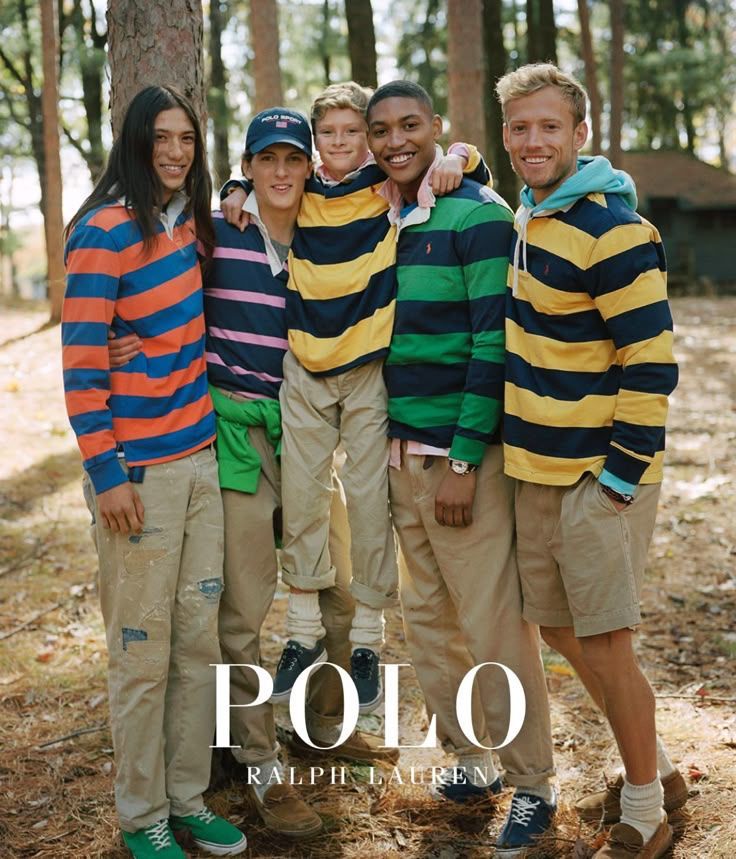
What we typically imagine when we think of a rugby shirt is, as previously described, a sturdy cotton shirt, often striped, with a short buttoned placket and a small attached collar.
A Shirt Between Classes
Rugby is sometimes perceived as a quintessentially working-class British sport. While there is certainly some truth to this, it doesn’t tell the whole story. In 1895, a dispute over whether players should be compensated for taking time off work to play and train led to a dramatic split in the sport. For many players who worked regular jobs as miners, dockworkers and labourers, the issue was far from trivial.
The dispute led to the creation of the Northern Rugby Football Union, which would eventually become known as Rugby League. The split was as much about class as it was about sport. Rugby Union retained close ties to England’s schools and universities, while Rugby League took root in the industrial towns of Northern England.
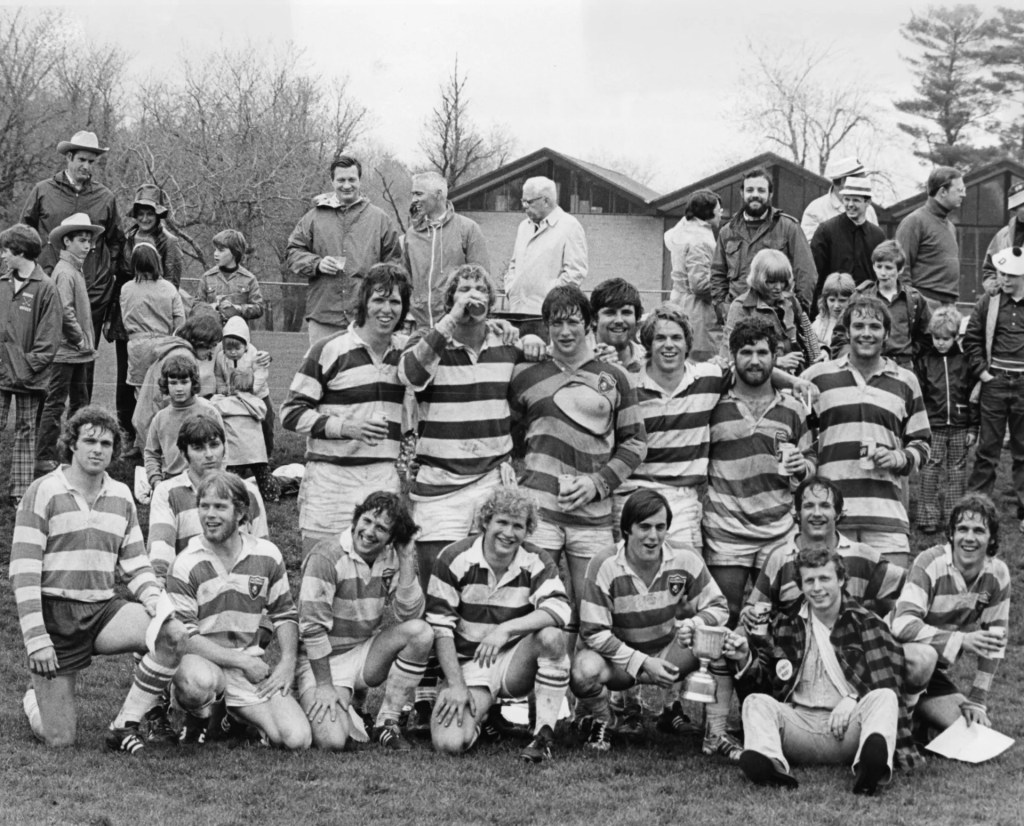
The rugby shirt therefore found itself at the centre of an unlikely class divide, worn both by industrial labourers and by university students at Oxford and Cambridge.
From Britain to the Ivy League
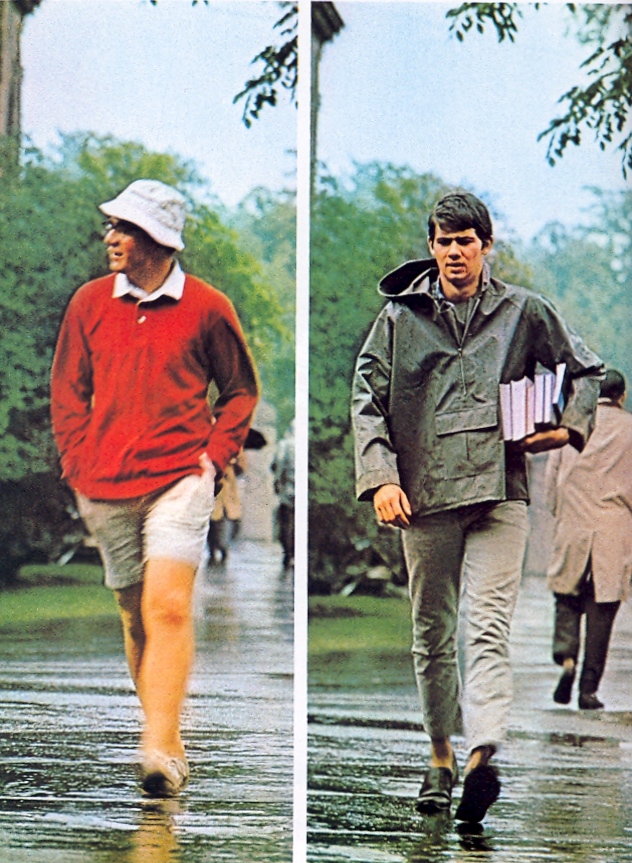
It was the university students, however, who would eventually bring the garment to a whole new audience. Rugby had been played at American colleges and universities since the late 1800s, although it wasn’t until the mid-20th century that the sport and its clothing found a place in the wider American collegiate wardrobe.
This marked an important shift in what the garment represented. While the shirt still had its roots in British working-class communities, in the US it came to represent a distinctly collegiate look, worn alongside other Ivy staples such as Oxford shirts, chinos and loafers. In a way, the rugby shirt lost much of its working-class identity.
Enter Ralph Lauren
And then came Ralph Lauren.
In the 1980s, he took the rugby shirt and other Ivy staples and packaged them into an entirely new lifestyle. As patterns of consumption began to change after the tumultuous 1970s, consumers no longer simply wanted to buy individual pieces of clothing. Increasingly, they wanted to buy into a lifestyle.
Ralph Lauren’s version of American preppy style borrowed heavily from Ivy League campuses, English country life and old-school sporting traditions. The rugby shirt fit perfectly into this fantasy world.

By then, you no longer had to play the sport to wear the shirt. By the 1980s and ’90s, the rugby shirt had become a symbol of the lifestyle surrounding the sport, or at least Ralph Lauren’s version of it.
 Journal
Leave a comment