

Part III – The Tie
The most timeless of all men’s accessories might just be the tie. Declared dead time and time again, and yet it is still with us, coming in and out of fashion in waves. We would venture as far as to say that it is the defining component of business attire. But it is not merely confined to business settings, depending on context, it can be the defining piece of an otherwise casual outfit. And why shouldn’t it, as it comes in so many variations? Knit ties can identify you as an intellectual, an artist, or an academic; striped repp ties as an Ivy style enthusiast; woollen ties with animal prints as a country sportsman, and the list goes on.
The History of the Tie
The origins of this piece of neckwear are often attributed to Croatian soldiers of fortune, fighting in the French War in the 17th century. They wore a piece of red cloth around their necks. According to this version of events, the tie’s origins stem from how this accessory struck the fancy of the French king Louis XIV. Whenever a royal has put their stamp of approval on something, you can always rest assured that the rest of a country’s population will be donning it within the year. So, as with so many other staples of a man’s wardrobe, it has a military history.

The tie stems from this piece of neckwear, which evolved through the centuries and eventually became the cravat – perhaps as a nod to its origins (cravat ~ Croatian). The cravats were, and still are, a wider version of the tie, most often knotted in a different way than the modern tie.
We can thank the English for the current form of the tie, as they experimented with it and found a way of producing it on an industrial scale. For a long while, it was an everyday accessory for most men who worked in offices, and among some, it still carries these connotations.
However, moving forward in history, it is now more of a personal statement and has become an accessory that men usually choose to wear rather than having it forced upon them by office dress codes.
Different Types of Ties
As mentioned above, a tie signals so much more than just being dressed up for a conservative business setting or for celebratory occasions. How it achieves this is through colours, patterns, materials, construction, and how it is knotted and worn.
We shall go through just a few of the thousands of tie varieties and the right settings in which you can wear them.
The Business Tie
This type of tie should ideally be subtle if you are a junior, but can be switched out for more vivid varieties as you move up the corporate ladder. Start out with silk ties in solid colours or with small patterns or motifs. This is usually a safe choice, as it will always look professional and ready for business. This sort of tie also works well for weddings.
The Wool Tie
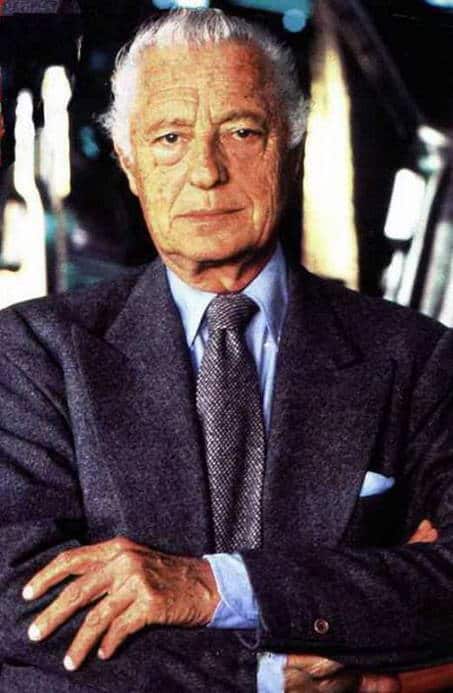
These ties are often favoured by Italians and Italophiles, in classic patterns such as Prince of Wales check or mini houndstooth. Perhaps because they were often worn by the world-famous industrialist and style icon Gianni Agnelli. They can, of course, also be worn in more sporty settings, such as hunting, quite often adorned with hunting motifs.
The Knit Tie
This type of tie is perfect for someone wanting to signal an intellectual or artistic persona. It also looks great with a classic Ivy style.

Colours and Patterns
Depending on the setting, the colours and patterns of your tie can be crucial.
The Solid Business Tie
Choose a subdued and preferably dark colour if you want to blend in. Some safe choices are navy, grey, burgundy, and sometimes brown.
The Playful Silk Tie
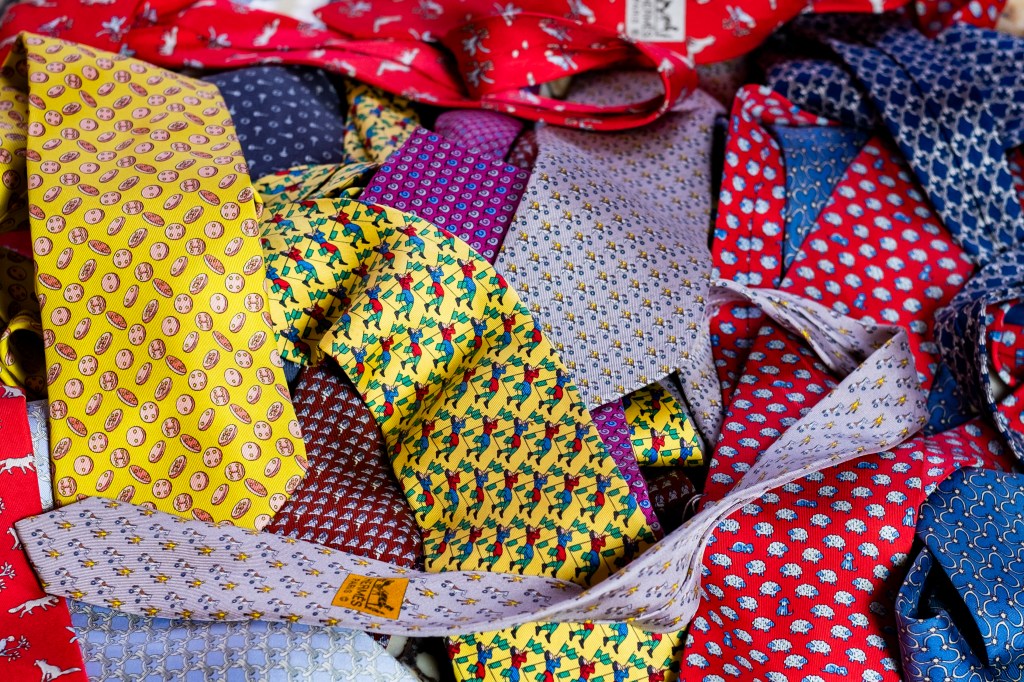
Opposed to what you might think, there is room for playful motifs in business settings. Just look at the colourful and inventive prints of such tie-makers as Hermès, Celine, or Leonardo.
The Striped Tie
In most countries, this is just a stylistic choice, whilst in a few, like, for example, the USA and England – this may very well tell you that its wearer is part of a club, a school, or a military regiment.

The Madder Tie
The madder tie is often a tie with medallions or a paisley print, in a type of silk that almost looks and feels a bit dusty. Originally printed in a meticulous process in England, but now made in different varieties by tie-makers all over the world.
The Funeral Tie
Depending on how close you were to the deceased, you can either wear a white or black tie (not to be confused with the dress codes).
The Summer Tie
Want to look splendid for your dinner in Nice? Well then, why not wear a light-coloured linen tie?
Three Well-Known Tie-Makers
There are an endless number of fantastic tie-makers in the world. We couldn’t possibly list all of them here, but we will, however, mention three makers that represent three different schools of tie-making.
A famous Neapolitan family-owned company that has made ties for kings as well as high-ranking politicians, celebrities, and other men of note. Handmade in Naples, of course.

A very French brand, which can be seen in their often playful colours and prints – quite often in a Ligne Claire aesthetic.
An old and highly respected British tie company that was bought by Mark Cho and a few other Chinese menswear curators of modern cool. Now it is a full-fledged clothing brand with all types of high end garments, shoes and accessories.
The Knot
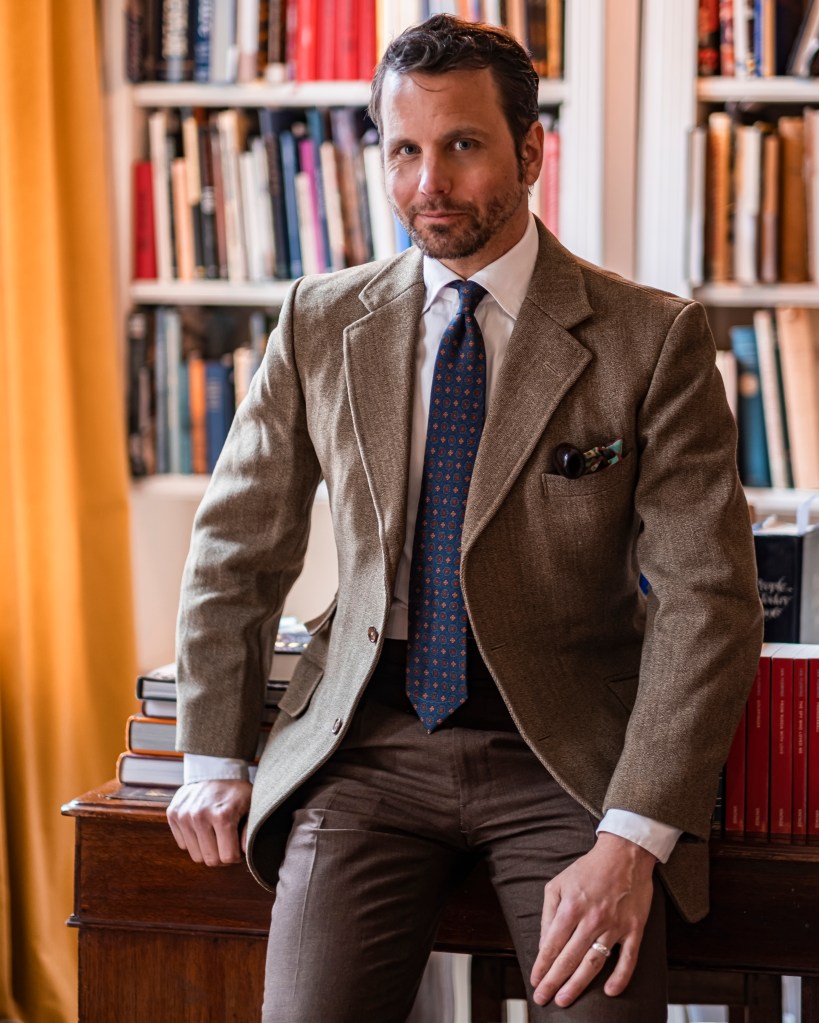
This is what separates the truly elegant men from the tacky. There are said to be over a thousand varieties of tie knots. But when it comes down to it, there is only one knot needed: The Four-in-Hand knot. Depending on the lining and material, you can make this knot bigger or smaller. The elegance lies in its simplicity and slight asymmetry.
Steer clear of bulky Windsor knots or ridiculously overcomplicated monstrosities like the Trinity knot.
This is perhaps best said by Ian Fleming in one of his books about the world’s most famous secret agent—James Bond:
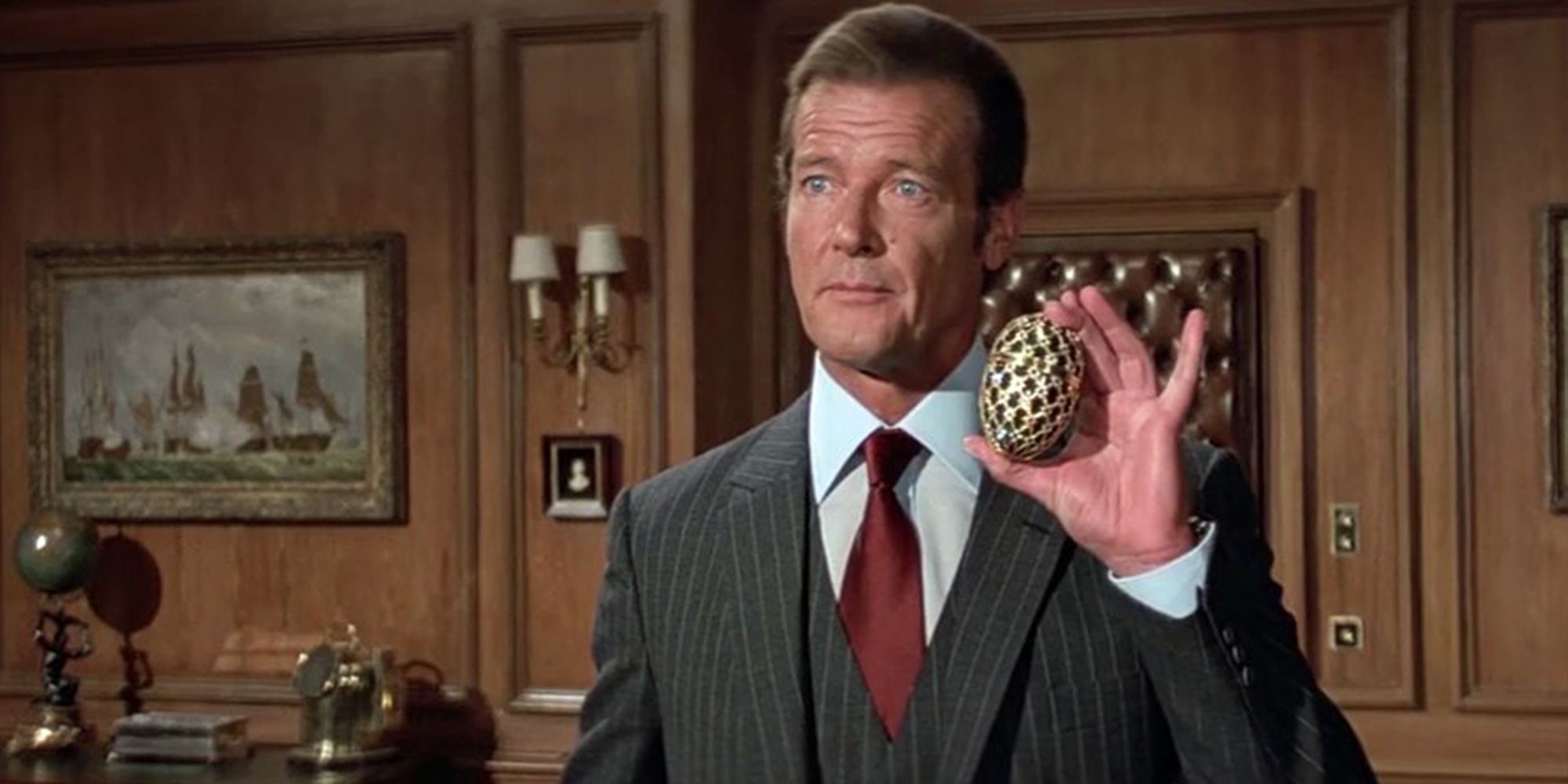
“It was tied with a Windsor knot. Bond mistrusted anyone who tied his tie with a Windsor knot. It showed too much vanity. It was often the mark of a cad.”
 Journal
Leave a comment