

Part II – The Navy Suit
Building a men’s wardrobe that will truly stand the test of time and that will make you look just right for every occasion, is a challenge for a lot of men.
If you have read a few style guides, you will recognize some of the garments we list in The Pillars of a Timeless Wardrobe. But we hope that these guides will offer you at least a bit of new insight or ideas. Post number II in this series will be handling the navy suit—the one suit every adult man should own.

Why navy?
This is perhaps the easiest question to answer: the colour navy complements all types of complexions, from ginger men to men of colour. The colour itself, as the name suggests, is originally associated with the seafaring men of the British Royal Navy—dating back to 1748—as masculine an inspiration as any. It is a dark, elegant, and sophisticated colour, suited for boardrooms as well as for special occasions such as weddings, christenings, and even funerals. In many instances, it’s also a completely acceptable manner of dressing for slightly more casual situations, such as cocktail events.
The Business Suit
The goal of this dress code, at least if you work in a more formal setting, is not to stand out through your way of dressing. You want to make the impression of being well put together and professional—not a peacock. Let the cut of the suit, the cloth, and tasteful style choices speak for you. Wear the suit with a good business shirt (read our post on shirts here) for a subtle look. Choose a discreet business tie—preferably solid colour, small patterns, or stripes. We will be presenting ties in more detail in a future post, but let’s just outline the basics here.
The Solid Coloured Tie
Preferably, choose a colour in a subdued hue.

The Small Patterned Tie
This choice actually allows for a bit more colour, as long as it is in good taste. Look to designers and makers such as Hermès, Nina Ricci, Ferragamo, Drake’s, and the like.

The Striped Tie
If you are in the US or Great Britain, you might want to double-check that you are not wearing the colours of a particular regiment, school, or club (although nowadays most people don’t really care that much). Other than that, a striped tie always looks good with a navy suit.

The Footwear
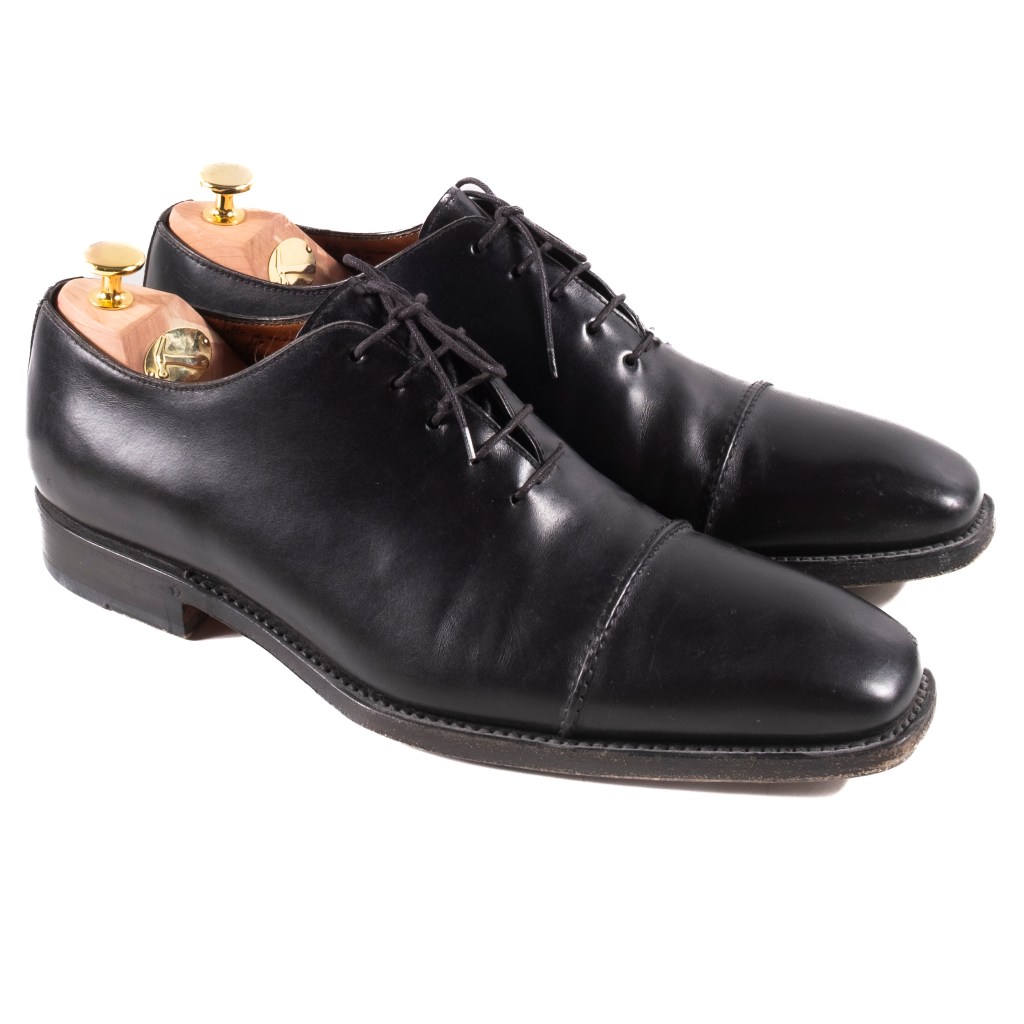
You just can’t go wrong with black oxfords, although black Adelaides or penny loafers are acceptable in many business settings, despite their less formal look.
The Socks
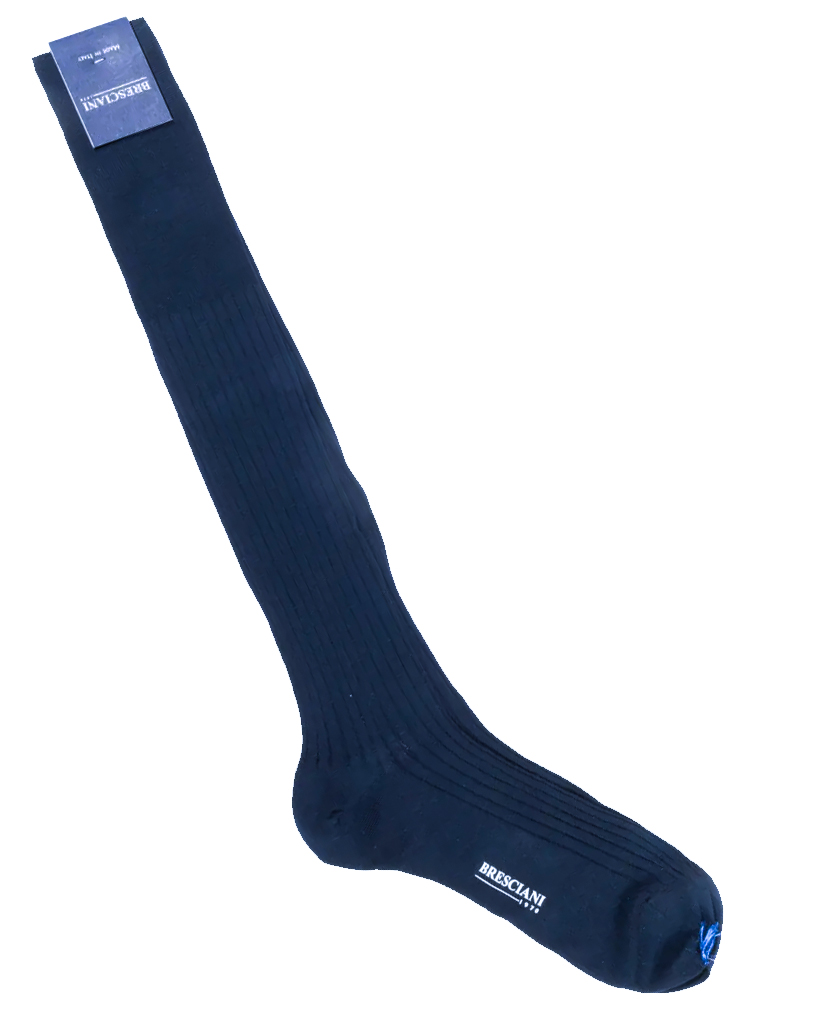
Navy coloured, of course! Wool is nice, but cotton is completely fine as long as the colour hasn’t faded.
The cocktail suit
You can, of course, go with the same look as you would in any business setting, but the cocktail suit is typically worn in a more leisurely environment. Say you are invited to an evening cocktail event and there is no pronounced dress code—the navy suit can be a good canvas upon which you can paint the image of yourself that you feel most at home with and that reflects the setting you are in.
A more cultural or artsy setting? Swap the shirt and tie for a turtleneck or just a nice knitted polo (there are summer versions as well as fall/winter versions of this type of shirt). If it’s an even more casual setting, you can even wear a rounded collar shirt or a high-quality T-shirt, for a bit of that casual-but-dressed-up sexy style that Don Johnson made so popular in his heyday.

Versatility
As we stated, this suit colour is a staple for good reasons. A solid navy-coloured suit is not merely a suit—it can be split up, where the jacket can be worn with different trousers to create different looks.
The Many Ways to Split Up the Suit
To start off, sure, you can wear the navy trousers with other garments, especially if it’s a more casual type of fabric such as cotton or linen. But we think that the most versatile piece is the odd navy suit jacket. A navy sport coat is also one of the pillars of a timeless wardrobe—and a jacket takes less abuse than trousers, so it makes more sense to get extra wear out of it.
We will be starting off with a look so classic that it’s sometimes referred to as the “menswear uniform.”
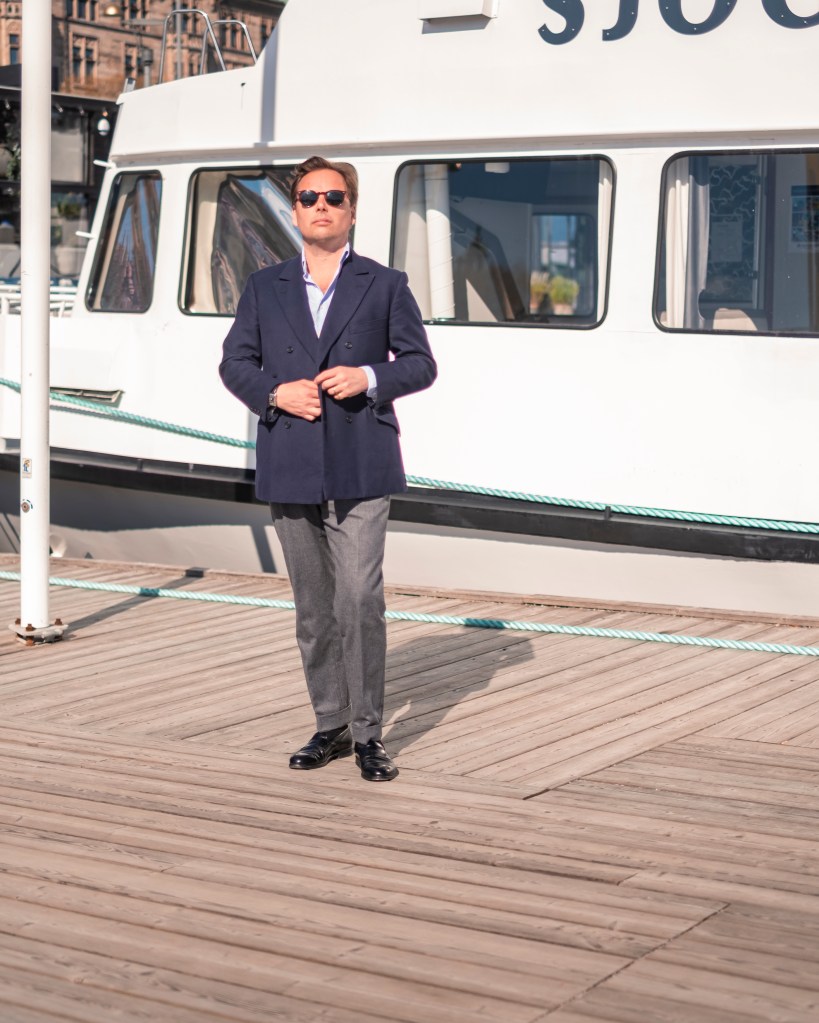
The Navy Jacket and Grey Trousers
It’s a fantastically versatile combination and almost as acceptable in a business setting as a suit. If you want to pull off this look in the most classic manner possible, we would suggest flannel or cavalry twill trousers for winter and something lightweight with a bit of texture for summer. Our choice of wool cloth for summer is often a high-twist wool, such as Fresco. If you want something more casual, linen or cotton fabric will look great.

The More Casual Combinations of a Navy Jacket
Now, the sky is really the limit when it comes to how you can combine your navy jacket with everything from corduroy to denim. In this instance, we also believe that pictures speak louder than words:
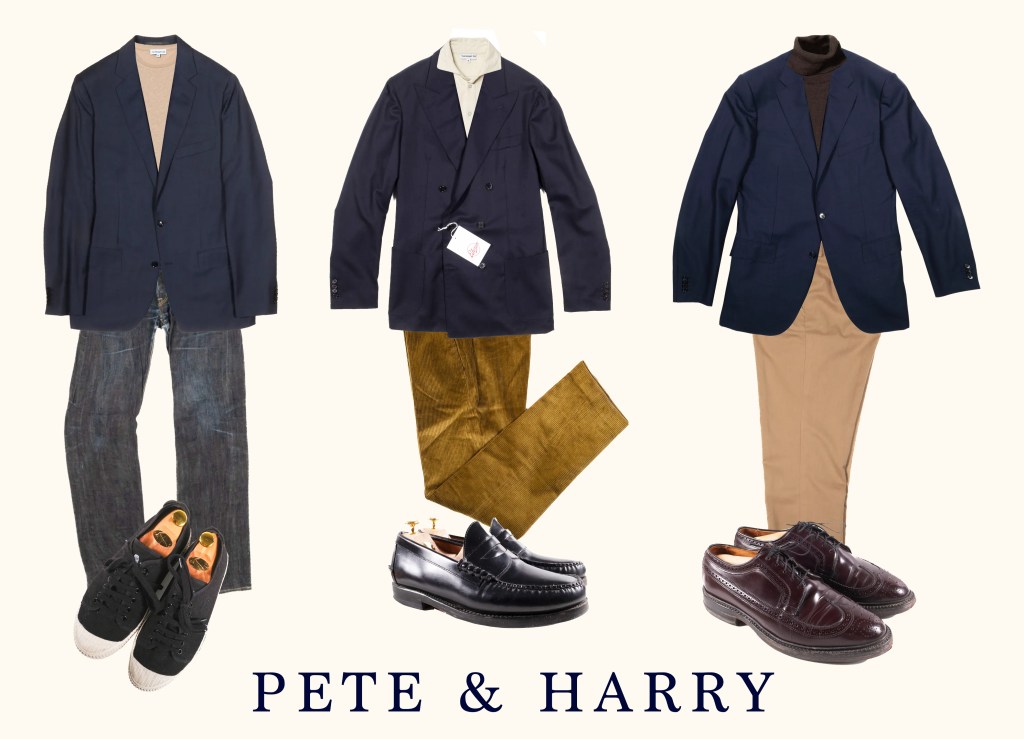
Our tip when it comes to navy jacket combinations is to think about which level of formality you want to go for. In the examples above, we would say that the one on the left is for the most casual everyday situations. You may work in an office where t-shirt and jeans is the normal work uniform for most of your colleagues (IT for example). This makes it easy to stand out in a positive way by just throwing on your suit jacket. The outfits in the middle and to the right would work in most environments that call for a slightly smarter way of dressing but where a full suit would look out of place, for example at an advertising agency or an architectural firm.
The Formality spectrum of Navy Suits
This is in many ways an extension of the last paragraph, as navy suits differ A LOT depending on factors such as materials, weave and design details.
The Formal Navy Suit
Contrary to popular belief, factors like whether the suit is three-piece or double-breasted don’t really affect formality. Similarly, peak vs. notch lapels or two vs. three buttons are stylistic choices rather than formal indicators.
These are rather varieties that may be more or less usual. For example, a three piece will stand out in most environments. The three piece suit used to be the norm but is so unusual nowadays that it is often considered a quirky style choice. The double breasted suit is more common and doesn’t really look out of place in any settings, but it is, however, not the norm in most offices. So, if you aspire to make as little sartorial noise as possible, a two button suit with notch lapels is your go-to. We will be going into more details in a future post where we will be discussing the anatomy of a tailored jacket.
We have given the trousers less attention than the jacket, and that is because they are not as eye catching to most people. To people who don’t spend copious amounts of time reading about tailored menswear, most trousers look alike. The big differences a layman might notice is the width and length of the trousers. We know that there are so many other details one could discuss, such as pleats, cuffs, belt loops, side adjusters, fishtail backs, handsewn details, et cetera. But, once again, this is the matter for a future post.
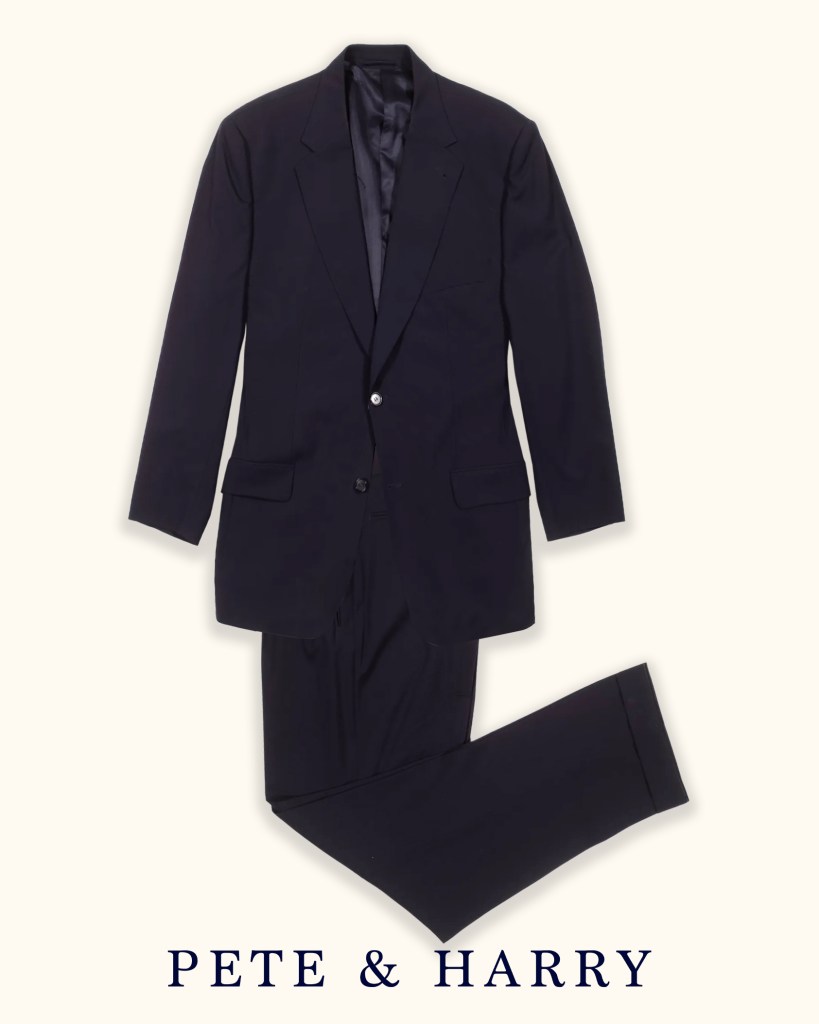
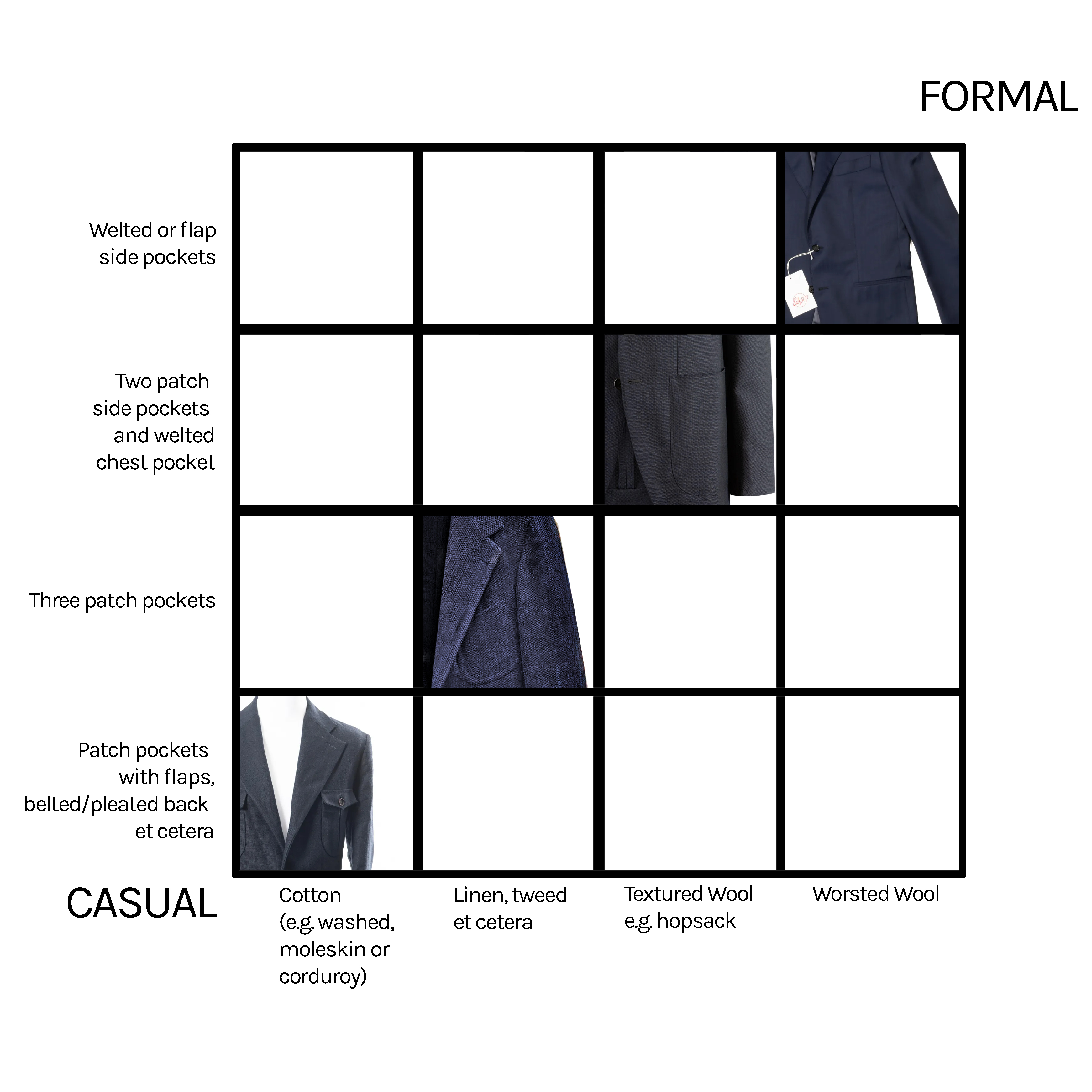
The most obvious markers of a formal navy suit are design choices and cloth. The finer the weave and the less visible structure it has, the more formal it will look.
The design choices for a formal navy suit, for any formal suit really, are the pockets. A formal suit usually have classic flap pockets or welt pockets. For an English suit, these can often be slightly slanted, while other countries favour a straight cut side pockets. The chest pocket on a formal suit is always single welted.
The Casual Navy Suit
This may sound like an oxymoron, seeing as suits are inherently formal to most people. But with choices such as a more textured cloth, especially one in a cotton or linen quality, with patch pockets and other details that make the suit slightly more distinguishable in a crowd, it is in fact a different beast.

We could go on forever about the navy suit, but some details are best left to future posts. For now, the important take away is how essential the navy suit is to a well dressed man’s wardrobe.
 Journal
Leave a comment