
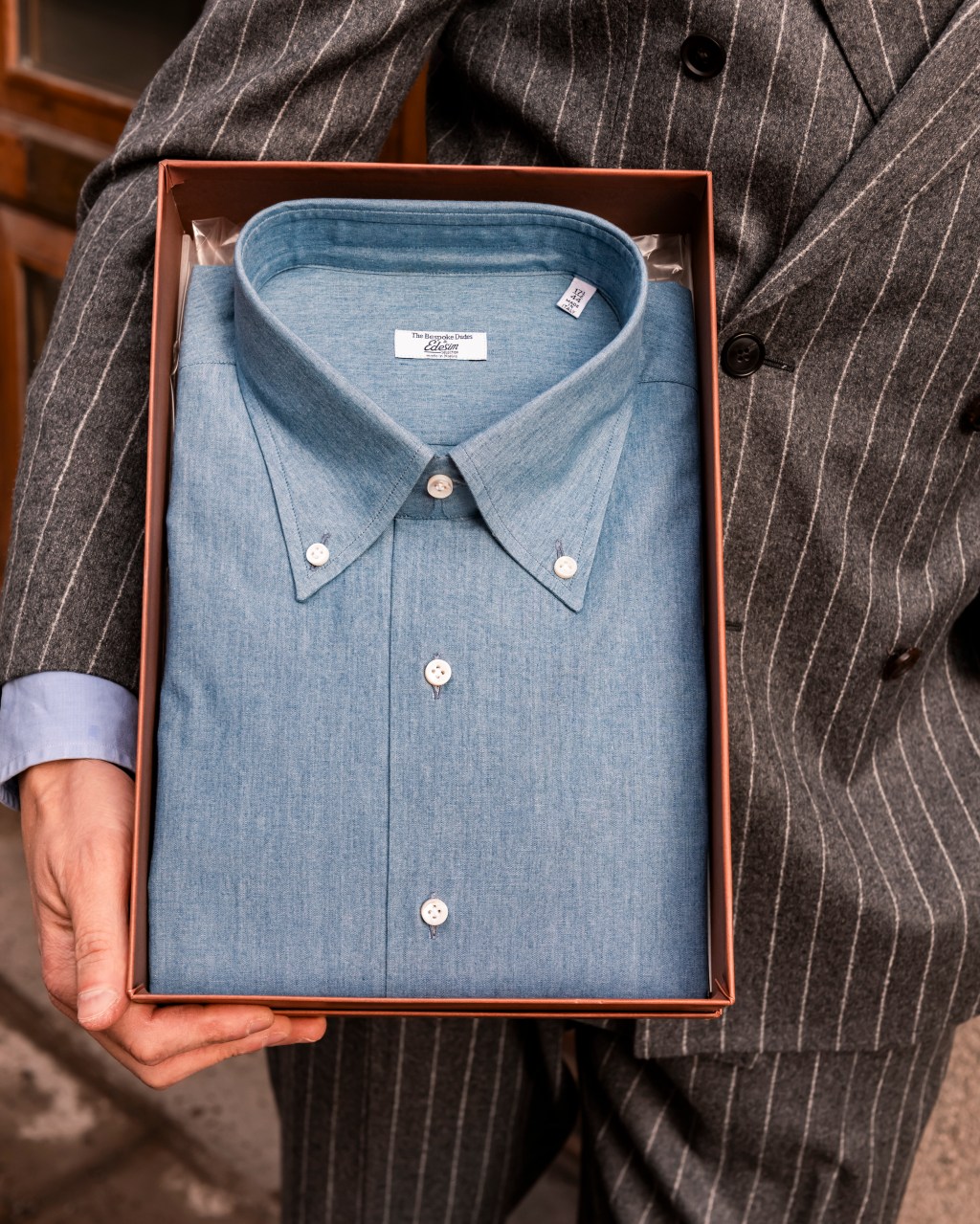
Part I – The Shirt
Originally an undergarment, the shirt is now a crucial part of a man’s wardrobe. You could even argue that it’s the foundation. So, what can one say about shirts?
– A whole lot.
The History of Men’s Shirts
In the beginning, there was the shirt. A bit dramatic as an intro, but nonetheless very true—at least if we’re talking about the most long-lasting garment still worn frequently today. The earliest known examples of this type of clothing date back to 3,000 BC. Naturally, the shirt has evolved over the millennia, gradually taking on its current form during the Middle Ages. However, even then, it didn’t resemble the shirts we wear today.
Since we assume you’re more interested in a contemporary guide to modern-day shirts and their various uses, that’s exactly what we’ll be covering in this post.
The Formal Shirts – Evening Dress
The White Tie Shirt
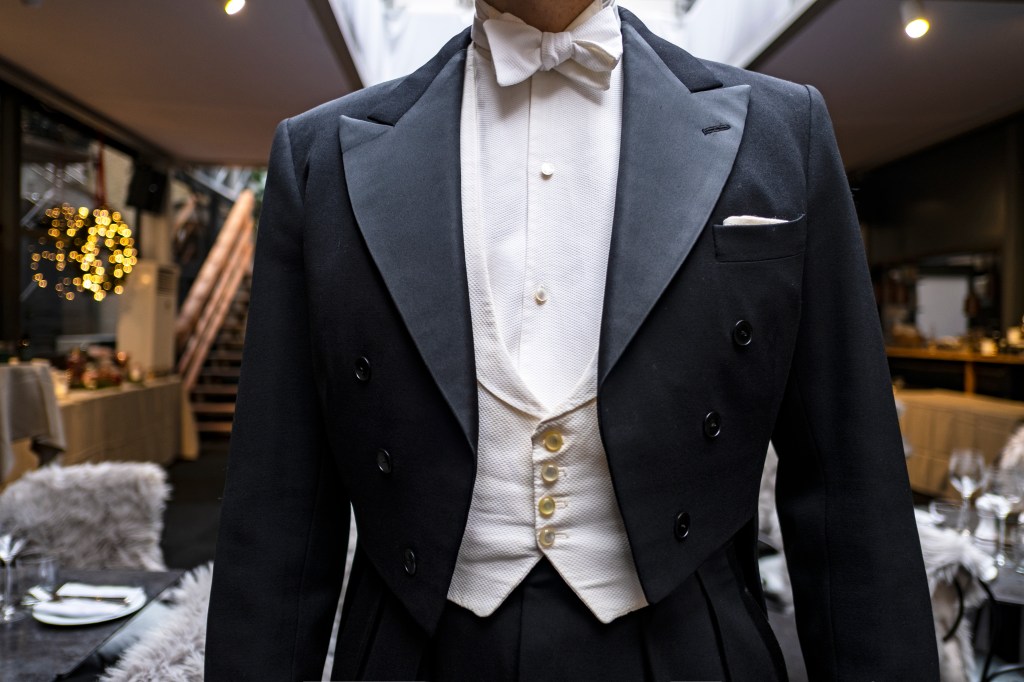
This shirt is worn with tailcoats—what is properly known as white tie, a long-standing dress code.
Originally, the white tie shirt featured a high, detachable wing collar, a starched chest made of piqué cotton, and an extra-long length to ensure it stayed tucked into the high-waisted trousers. Unlike French cuffs, which fold over, this shirt features single cuffs fastened with cufflinks, similar in appearance but different in construction. The front is buttoned with detachable shirt studs, ideally white.
Interestingly, the design of the white tie shirt worn in the 1800s is nearly identical to today’s version, except that the modern collar is slightly lower and attached to the shirt body.
The white tie shirt is primarily worn for ceremonial occasions such as weddings, balls, and by members of orders. We won’t go into the full white tie dress code here, though it belongs to the broader category of evening dress, along with its modern cousin—black tie.
The Black Tie Shirt

The second most formal shirt is the black tie shirt, which shares some traits with the white tie shirt. However, rather than focusing on similarities, it’s more interesting to highlight what sets them apart.
Technically, a white tie shirt isn’t a faux pas when worn with black tie, but it does look somewhat anachronistic in most black tie settings. The reason is simple: these shirts serve entirely different purposes. While white tie is the pinnacle of formal wear, black tie is a step down in formality—though over time, it has taken over many events that were once exclusively white tie.
The main differences between the two shirts lie in the collar, cuffs, chest, and placket:
• Collar – The black tie shirt features a spread collar, always worn with a black bow tie.
• Cuffs – Unlike the white tie shirt’s single cuffs, black tie shirts have French cuffs (double cuffs).
• Chest – While the white tie shirt has a stiff piqué cotton front, a black tie shirt allows for pleated, ruffled, or other decorative fronts. However, the most classic choice remains a starched piqué cotton front.
• Placket – The placket (the buttoning row on the front) can either be a French placket (seamless and simple) or a hidden placket (where an extra layer of fabric conceals the buttons). The classic black tie shirt follows the white tie convention: two shirt studs should be visible above the vest or cummerbund.
The first black tie suit was tailored for King Edward VII by the renowned Savile Row house, Henry Poole.
The Business Shirt
The business shirt offers an almost infinite variety of designs and fabrics. However, its common goal is to pair well with a business suit. This limits collar options to turn-down collars, spread collars, and cutaway collars.
Some historical collar styles, such as club collars and pin collars, have been acceptable for business wear in the past but may look slightly out of place today. These are often favored by men who like to stand out.
Business shirts aren’t just for the office—they are appropriate for formal occasions such as weddings, baptisms, funerals, and other dress-up events.
The different types of business collars
The spread collar
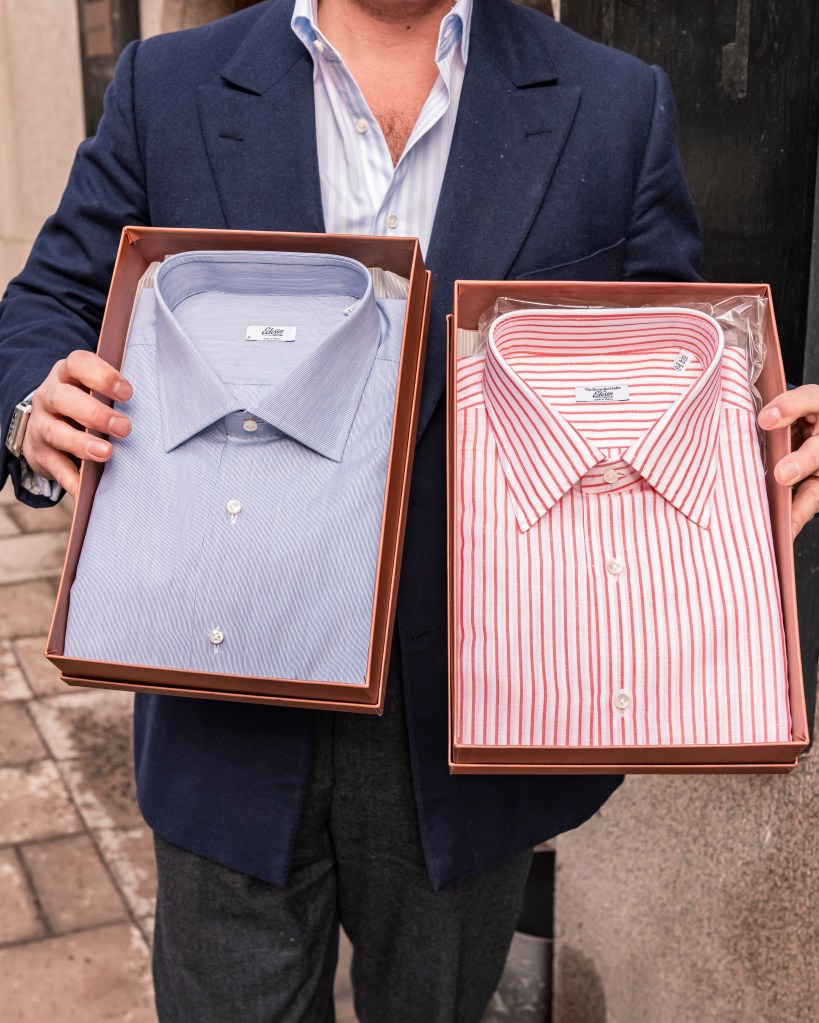
The spread collar comes in various styles depending on where it is made. Italian shirtmakers often favor slightly curved points, while British makers tend to prefer a straighter cut. However, both regions produce both styles. The defining feature of the spread collar is, as the name suggests, its spread—as opposed to the point collar, which angles more downward.
A key detail: the collar points should ideally be long enough or angled in a way that they tuck neatly under the lapels of your jacket. The two examples in the photo demonstrate this well—the left collar is slightly more angled, while the right one angles downward more, making it closer to a point collar.
A spread collar works in all suit-appropriate settings, never appearing overly flashy or out of place. However, it truly shines when worn with a tie.
The point collar

Perhaps the most classic of all business collars, the point collar angles downward, leaving a slightly smaller space for a tie knot. Regardless of collar type, a four-in-hand knot is always the right choice.
The cutaway collar
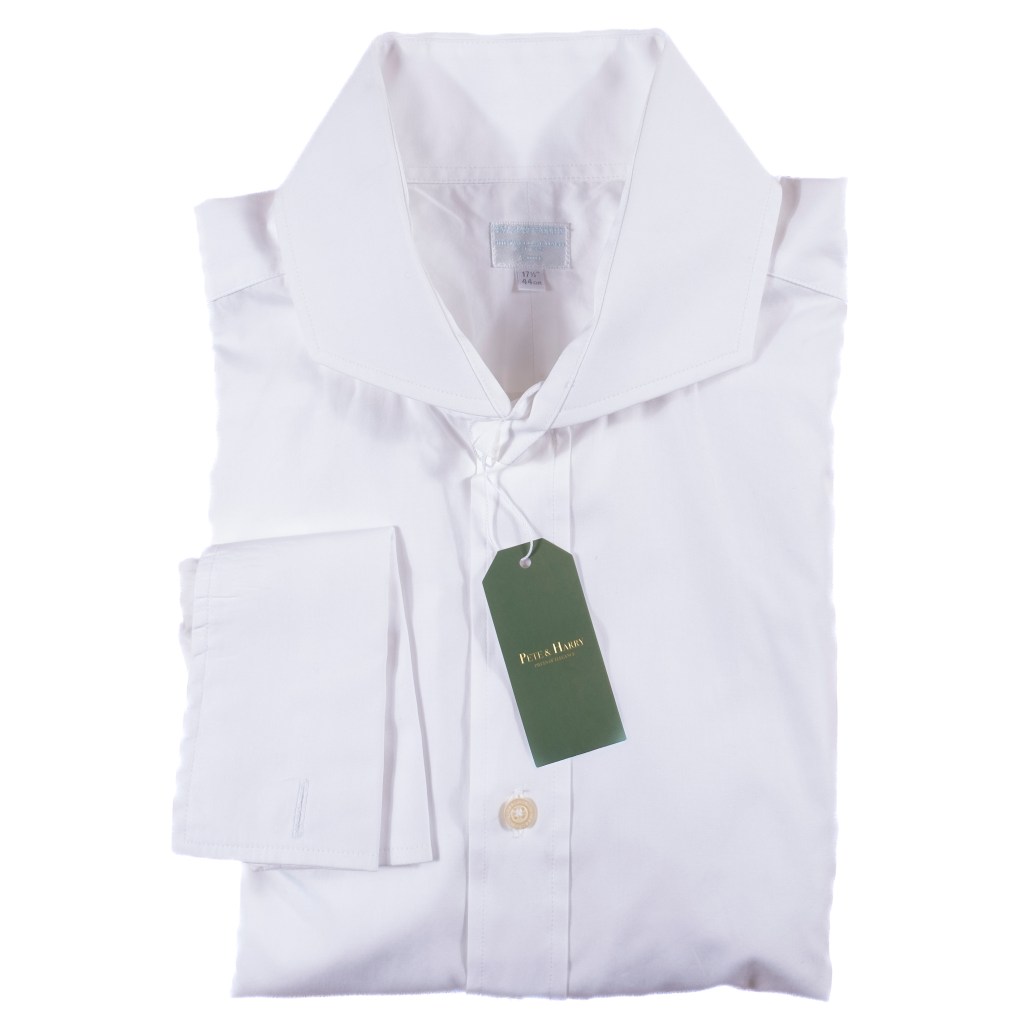
The cutaway collar has a more aggressive shape—its collar points angle sharply outward, almost horizontally. It is a fully acceptable business collar, but because it exposes more of the tie, a larger knot (such as a double four-in-hand) may be needed. However, avoid the double Windsor knot, as its bulkiness and symmetry make it look slightly vulgar and less refined.
The other markers of a business shirt markers
The cuffs
Business shirts come with two main types of cuffs:
1. French cuffs – Double-folded cuffs fastened with cufflinks. This adds a subtle statement in modern business settings but remains appropriate.
2. Single cuffs – Fastened with buttons, not cufflinks. These come in multiple styles:
• Rounded – Edges curve in an arch.
• Angled – Edges cut in a sharper angle.
• Straight – Ends in a straight line.
Buttons should ideally be made of mother of pearl.


The cloth
The most common weaves for business shirts include:
• Poplin – Smooth and lightweight
• Twill – Soft with a slight texture
• End-on-End – A subtle, two-tone effect
• Herringbone – A refined zigzag pattern
• Pinpoint – A durable weave that balances texture and smoothness

When it comes to colour and pattern:
The most traditional business shirt colors are:
• White
• Pink
• Off-white
Darker or more saturated colours may stand out too much in a conservative office.

Striped Shirts
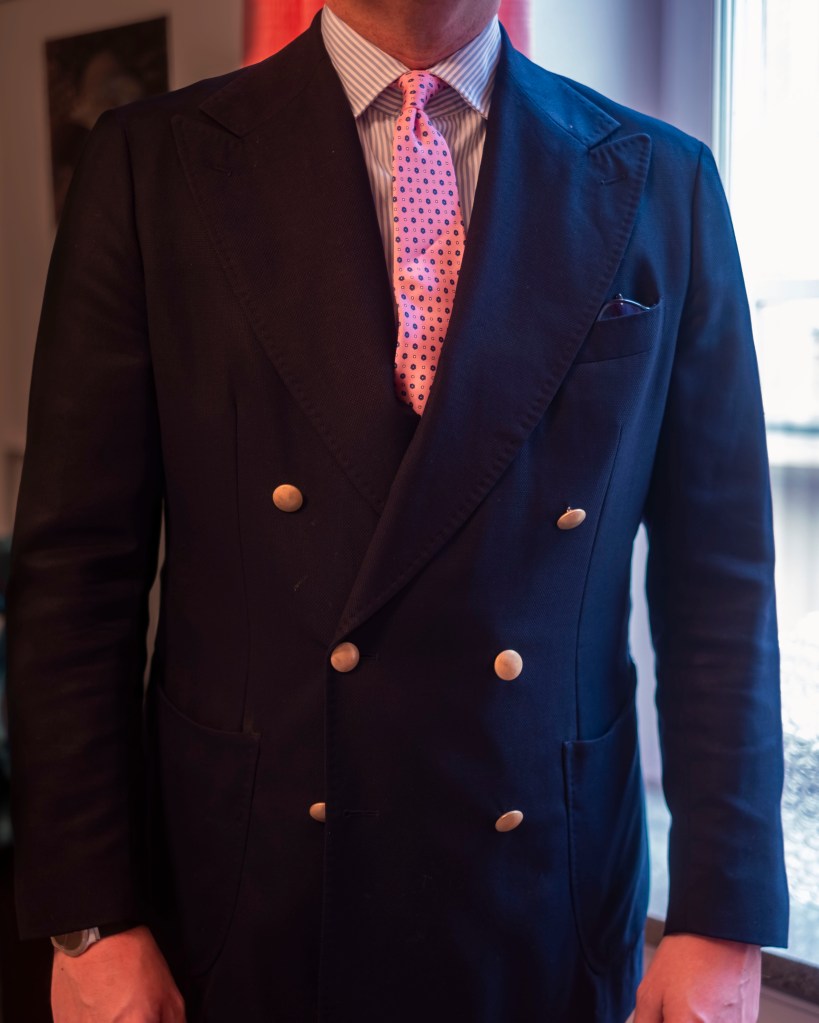
Stripes add variety while remaining professional. A two-color rule applies—one of the colors should always be white. The width of the stripes influences the look:
• Wide stripes (e.g., Bengal or butcher stripes) are bold but still professional.
• Finer stripes create a more subtle effect.
Subtle Patterns
• Mini houndstooth or mini squares – Should be small enough to appear solid from a few meters away.
Contrast Collars
Contrast collars (such as those worn by Gordon Gekko in Wall Street) can make a bold statement but may feel dated in conservative business environments.
Casual Shirts: Relaxed and Stylish
Casual shirts offer the most variety in terms of fabric, cut, and styling. Here are some key styles that every man should consider for his wardrobe.
The Button-down Shirt

A versatile staple, the button-down shirt originated in Polo matches, where players secured their collars to prevent flapping. It’s often made from Oxford cloth, a durable weave that balances casual and smart aesthetics.

In the UK, button-down shirts are strictly casual, while in the US, they are often worn with ties as part of the Ivy League style.
The Polo Shirt

First designed by René Lacoste for tennis, the polo shirt is a go-to summer essential. Made from breathable piqué cotton, it typically features a ribbed collar and short sleeves. Long-sleeved versions offer a more refined alternative.
The Resort Shirt
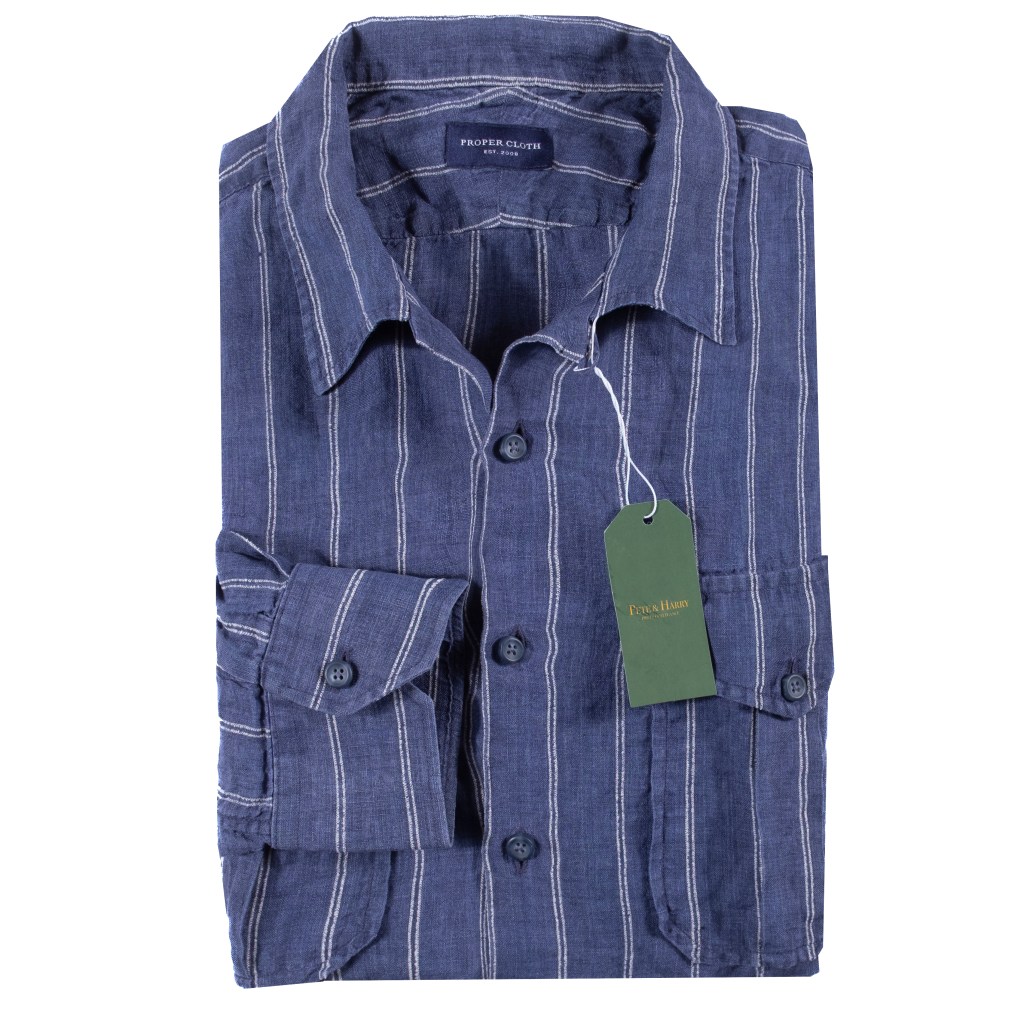
A broad category that includes Hawaiian shirts, guayaberas, seersucker shirts, and other styles featuring an open spread collar. These shirts exude a relaxed, vacation-ready vibe. This collar type also goes under the name Cuban collar.
The Anatomy of a Shirt
We will not go into the specific details of shirt construction here, but at least want to show you the main pieces of a shirt’s anatomy:

Final Thoughts
Shirts are more than just a wardrobe essential—they are a statement of personal style. From the highly formal white tie shirt to the laid-back resort shirt, each type serves a specific purpose and carries a unique history.
Understanding these distinctions allows you to dress appropriately for any occasion while refining your personal aesthetic.
We’ll dive deeper into specific shirt fabrics, tailoring details, and styling tips in future posts. For now, consider this your essential guide to building a well-rounded shirt collection.

 Journal
Leave a comment