
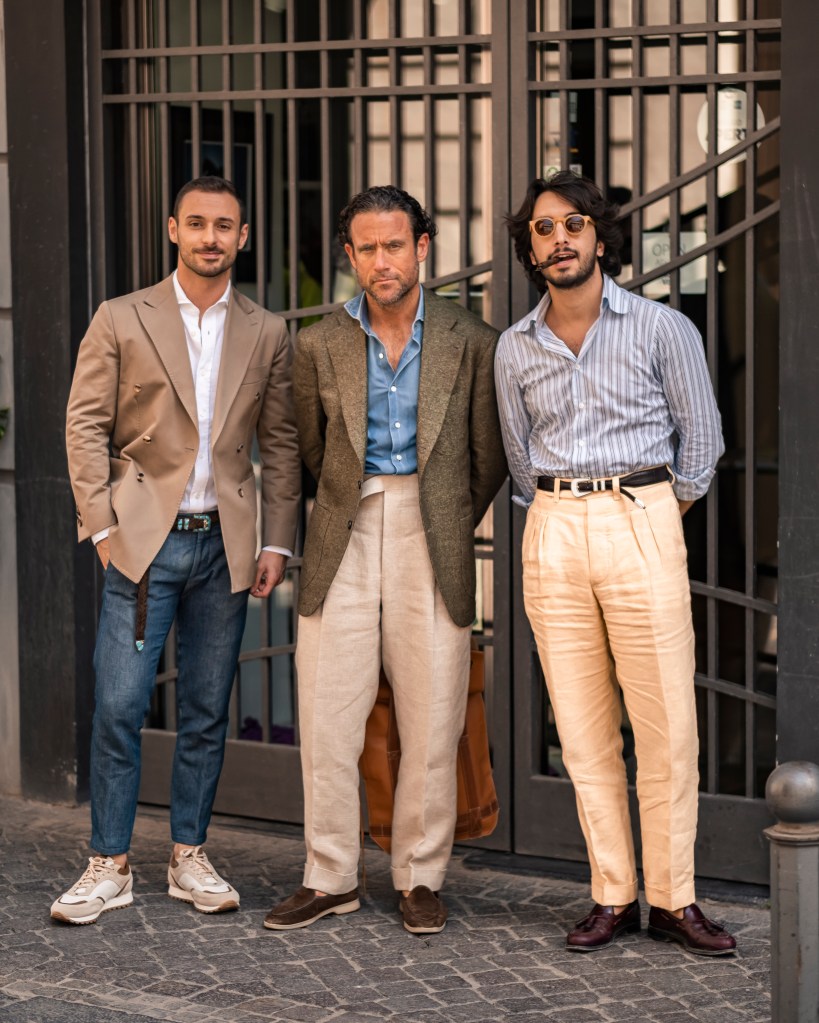
There certainly is something about Italians and their sense of style that has spoken to a global audience going back to the Middle Ages. Perhaps it’s the beauty of the landscapes and the Mediterranean climate that inspires the perfectly imperfect way of handling colors, cuts, and patterns to such an extent. But Italy is a very diverse country. In fact, historically speaking, it was quite recently several different kingdoms and principalities. Different geographical areas were heavily influenced by traditions stemming from a wide variety of both local and imported cultures.
One area perhaps more diverse than most is Naples. Being a coastal city, it has naturally been a harbor—both metaphorically and literally—for worldwide cultural influences. The city has played a significant historical role and lies in the shadow of Vesuvius, not far from the ill-fated city of Pompeii, buried under tons of magma from the slumbering giant that is Vesuvius. Even the architectural layout of the city is somewhat schizophrenic, as it has been under the rule of several foreign powers through the years. The city center is made up of various types of houses and styles. For example, the Quartieri Spagnoli (the Spanish Quarters) consists of city blocks made up of tightly packed houses climbing the hillsides that make up part of central Naples. Of course, there are remnants of the once-world-spanning Roman Empire, because, well… Italy.

Anyway, this is quite the digression, but perhaps an important one to just start scratching the surface of the volcanic rocks that make up the foundation of what Naples is.
Sartorially speaking, a somewhat shallow image of what makes up the Stile Napoletano has spread across the world of menswear in the last couple of decades. The image is of completely unstructured jackets—slinky stuff that carries no form or shape, and basically no canvassing or other elements that make up properly tailored clothes. This, of course, is a completely false notion. True Neapolitan tailoring has a history as long as the history of the region itself, particularly when it comes to craftsmanship. To keep it somewhat brief, the history of “modern” Neapolitan tailoring started with Vincenzo Attolini, the tailor for the world-renowned tailoring house Rubinacci. Since Naples is a city of storytellers, and several of these storytellers put their own personal spin on the tales, the history is hard to retell with 100% certainty. However, one undisputed fact is that Vincenzo was a master tailor, which is not a title taken lightly in Naples.
The story I’ve been told is that Vincenzo was a fan of British tailoring but found it unsuited (pun intended) for the Neapolitan climate and sense of style. So, he brought suits from Savile Row, dissected them, and decided what was needed and what could be discarded to create a new, more southern Italian approach to classic suit tailoring. He removed several layers of padding that help create the uniform-like silhouette of British jackets, in favor of a more relaxed, casual-styled jacket. One of the first jackets made in this style is still on display in Rubinacci’s shop in Naples. It has all the distinct markers of a Rubinacci jacket, such as the Spalla Camiccia, i.e., a sleeve head fastened to the body of the jacket in the same manner as a shirt sleeve. The front seam goes all the way down to the bottom of the jacket’s front. It has slightly extended shoulders (i.e., the shoulders extend past the wearer’s shoulders), high-cut armholes, and several other hallmarks of a proper Neapolitan jacket.

Some slightly malicious rumors claim that the invention of the Spalla Camiccia was a mistake— that Attolini wasn’t familiar with how an English shoulder was constructed, and therefore went with something he and his apprentices knew well: the shirt shoulders. This claim, however, seems too far-fetched to hold any truth. As mentioned before, Attolini was a master tailor. Although a proper British shoulder can present a challenge, it’s a reasonable assumption that a skilled tailor like Attolini would have no problem constructing such a shoulder.
So, what significance does Neapolitan tailoring have on modern-day menswear?
Quite a lot, actually. Even though, as I mentioned earlier, Italy is a country made up of many different regions, each with its own distinct styles of tailored menswear, the Neapolitan cut has become almost synonymous with “Italian tailoring” in the last couple of decades. This is despite the fact that northern Italian tailoring has almost nothing in common with the Neapolitan style. It is the softly tailored clothes that many men associate with Italian style (though, to be fair, calling soft tailoring “Neapolitan” is an oversimplification, as it exists in Rome, Sicily, and several other regions, with many tailors claiming to be the original inventors of it).
The reason Naples became so closely associated with Italian tailoring might just be the result of the great marketing efforts and the compelling storytelling of the Neapolitan craftsmen.
But there is something especially alluring about the Neapolitan style. It remains swanky, relaxed, and sexy — which is quite an achievement in a world where tailoring has been steadily evolving away from traditional, structured forms. Men travel from all over the world to experience it first hand, and proper Neapolitan tailored garments are coveted by discerning men who know exactly what they want.
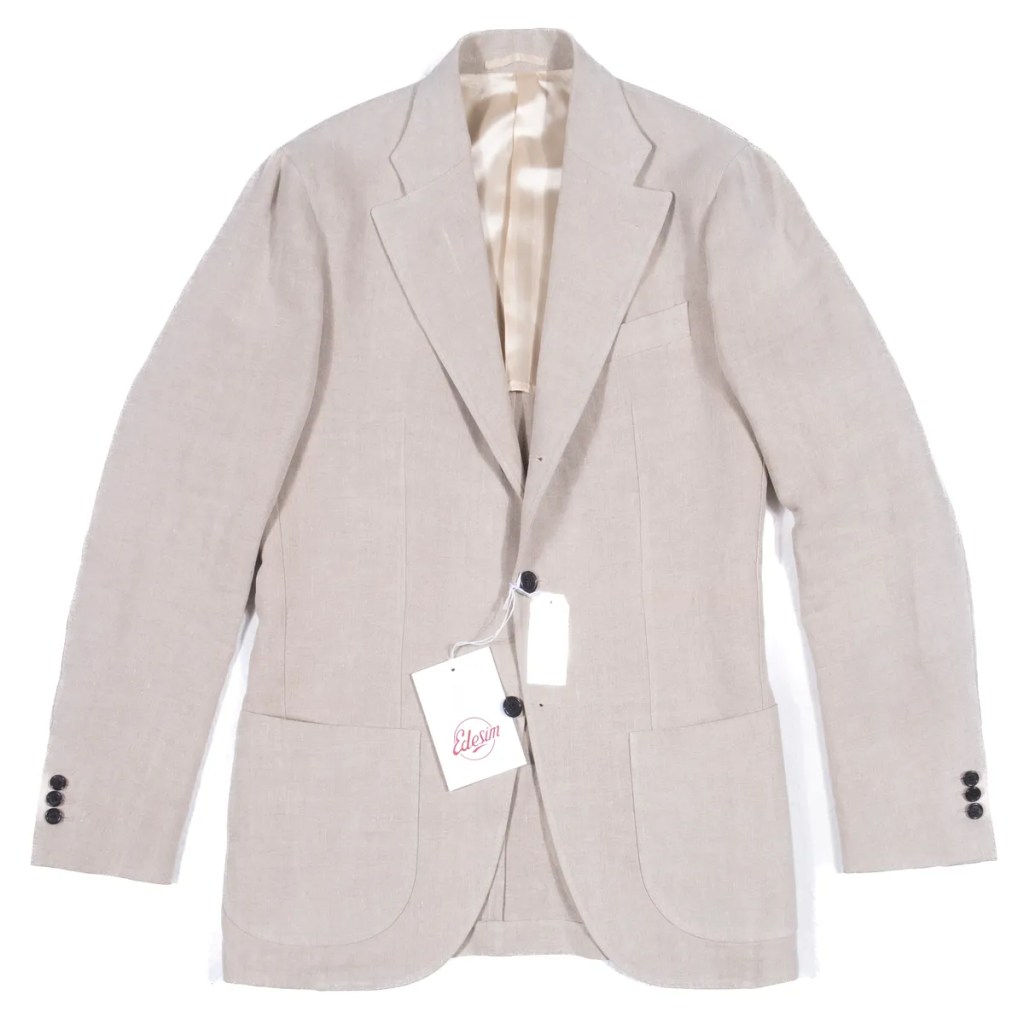
Neapolitan tailoring is more than just a style; it’s a statement. A blend of tradition and modernity, elegance and ease. In a world where fashion is constantly evolving, the enduring appeal of Neapolitan craftsmanship stands as a testament to a truly timeless style. For those who appreciate the finer details, Neapolitan tailoring is not just clothing—it’s an experience, a journey into a rich cultural heritage that will always remain in fashion.

 Journal
Leave a comment